by mfine
Platform
App
My Role
Design Lead
Industry
Healthcare
Product Duration
2 - 3 MONTHS
Period Tracker is more than just another feature in a wellness product — it’s a core engagement driver that empowers users to understand their cycles more accurately and confidently. Over time, we observed that while the prediction engine was solid, the logging experience itself was a major friction point — and ultimately, it was impacting both accuracy and user engagement.
In this blog, I want to walk you through how we rethought and redesigned the entire logging journey — from user research and problem framing, to solution ideation and interaction refinement.
At the start, we discovered a key problem:
70% of the 65% users who log, do not log their periods for more than one day, even though 90% of the total users have a period duration between 3-6 days.
The reminder notification for logging periods has a CTR of 11%
From a product perspective, this was critical — the more complete and consistent the logs, the better the predictions. Users who didn’t log regularly ended up with inaccurate data, reducing trust in the feature.
It became clear — this wasn’t just a UX issue, but a user psychology problem. The existing logging interaction was confusing and didn’t communicate why full logging mattered.
Before jumping into solutions, we anchored our decisions in real evidence. I took time to:
📊 Looked at competitor patterns — what other period apps do well and where they fail.
The insights were unanimous:
The current flow was cumbersome and unintuitive.
Users assumed their cycle was logged once they saw a prediction — even if they hadn’t entered any data.
Reminders lacked contextual value — i.e., they weren’t actionable without bringing users straight into logging.
These findings informed the two core design questions we needed to answer:
How might we make period logging intuitive, effortless, and even delightful?
And how might we reinforce the importance of logging without overwhelming users?
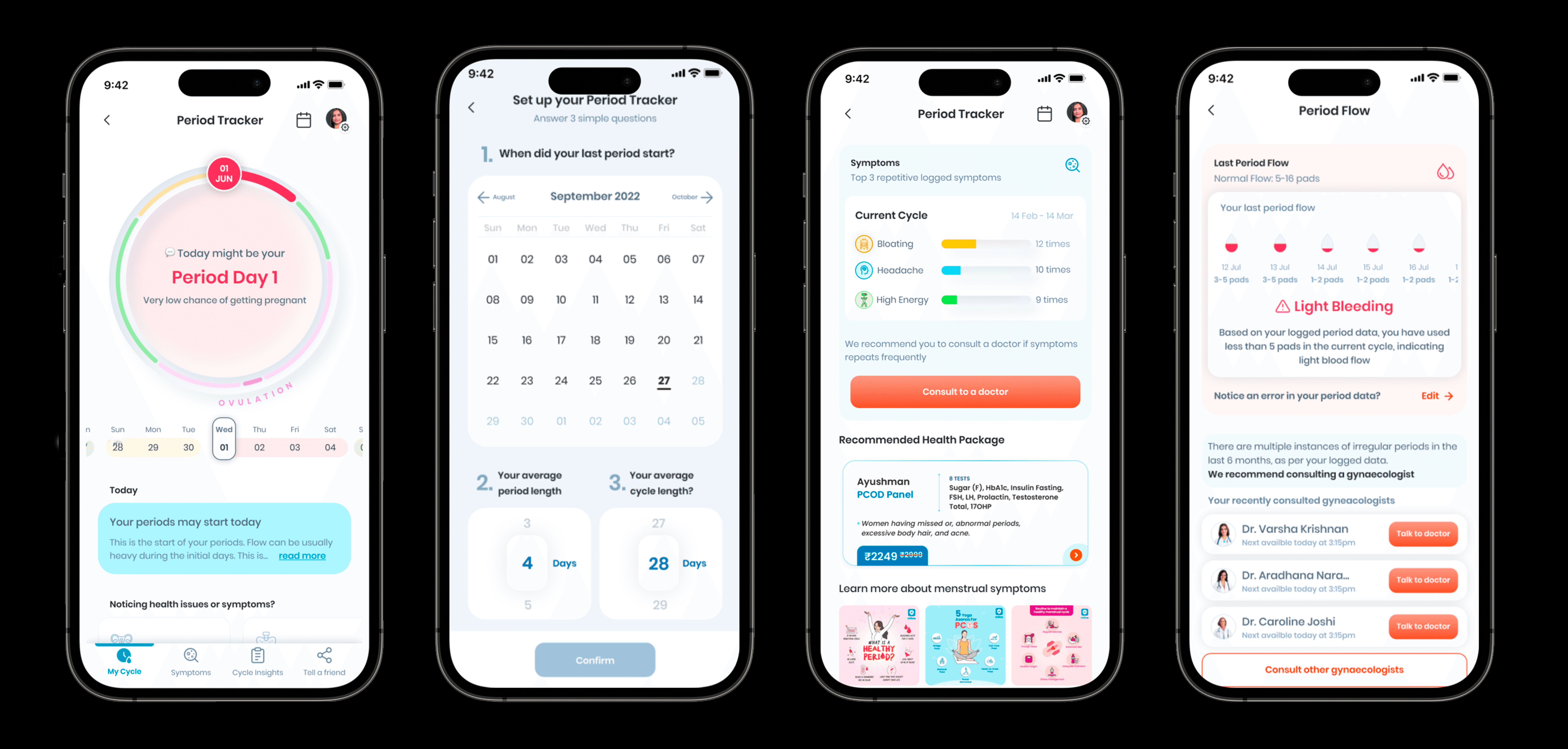
With those questions in mind, I reimagined the logging experience from scratch — dropping legacy assumptions and rebuilding for clarity and action.
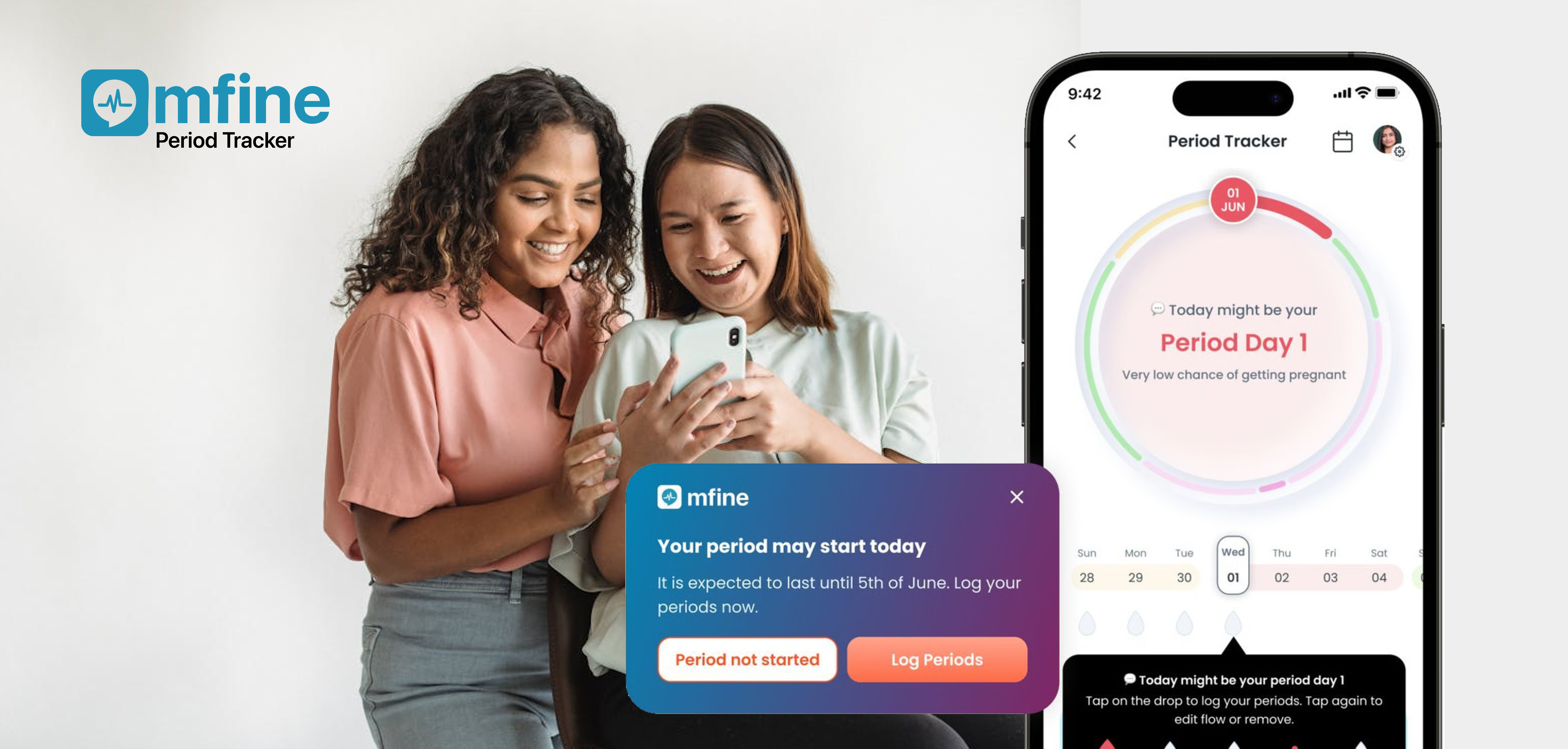
Rich Notifications with Logging Capability
Rather than sending generic reminders, we designed rich notifications that let users log directly from the notification itself.
This was about reducing friction — notifications aren’t just alerts anymore:
They’re action points.
Educating Through Interaction
An important part of the design was education through use — making sure users understood:
Why we need them to log daily during their cycle.
What logging more accurately does for predictions.
When and how to log flow levels.
Small interaction cues, animated transitions, and intentional UX writing made the experience more human and less mechanical.

Through our redesign, we are targeting ambitious improvements:
Increase month-on-month logging from 21% → 50%
Boost notification-driven logs from 11% → 40%
More frequent logging means better cycle prediction, deeper user trust, and ultimately — higher repeat usage and value across the platform.